


Why I Track Everything: The Real Story Behind My Health Data Obsession
I get asked this question a lot, usually with a raised eyebrow: "Daphne, why are you so obsessed with gadgets? Are those devices actually doing anything for you, or are they just expensive toys?"
It is a fair question. And the honest answer has nothing to do with fitness optimization or being an early adopter.
It starts with my mom. And my dad. And a wound infection that a wearable caught before my clinical team did.
Let me explain.
What I Noticed Before Anyone Else Did
Years before my mom was diagnosed with COPD (chronic obstructive pulmonary disease, a progressive lung condition), I used to watch her fall asleep at the kitchen table at night. I noticed the way she breathed. Pursed lips. A subtle effort that most people would have dismissed as nothing.
I filed it away. I didn't have the data to connect the dots, not then.
When the diagnosis finally came, I found myself wondering: What if I had been tracking her oxygen saturation? Her breathing patterns? Her sleep quality? Would I have seen it sooner?
I carried that question with me for years.
Bill's Story: 657 Readings and a Lesson I Learned Too Late
When my dad, Bill, moved to Kansas City with me and his health became more complex, I introduced digital monitoring into his daily routine. A Blood pressure monitor. A Fitbit. A digital scale. Remote tools that let me stay connected to his health, especially because I was on the road quite a bit.
And he was on board. Dad was an engineer. He understood why data mattered. (So when people tell me seniors don't want to use technology, I respectfully disagree; they just need to understand the why.)
I could log into his data from anywhere. I could see his step counts, his blood pressure trends, even when he was moving in the middle of the night. That's actually how I suspected he was having nocturia (frequent nighttime urination), not from a clinic visit, but from a pattern I saw in his overnight step data.
But here is what haunts me.
After we lost Dad, I went back through his data. Over 650 blood pressure readings. Months of step counts. And what I found was a story that had been telling itself in plain sight, declining activity, dropping blood pressure, subtle but consistent signals that something was wrong.
The data was there. I just was not looking at it closely enough, in real time.
What followed was a massive GI bleed, likely related to prior radiation therapy. And I have spent years asking myself: If I had been watching that data more intentionally, would I have caught it sooner? Would he have had more time?
I will never know. But that question is one of the reasons I do what I do.
When the Wearable Caught What the Clinicians Missed
The experience I just described was not the only time data changed the picture for me personally.
In 2024, I broke my leg during a Tough Mudder, a spiral fracture of my right tibia and fibula. While I was recovering in transitional care, my wearable started detecting changes in my physiology before anyone on the clinical team identified a problem. My body's inflammatory response was shifting. My heart rate variability was changing. The data was whispering what my wound had not yet started to shout.
A wound infection was developing, and the devices I was wearing helped surface it faster than a temperature check or a visual wound assessment would have.
That was not a coincidence. That was data working the way it is supposed to work.
This Is Not About Fitness
I want to be clear about something: when I talk about wearables, biometrics, and digital health monitoring, I am not talking about chasing a better performance score or hitting a daily step goal for its own sake.
I am talking about building a proactive, personalized health ecosystem that can do three things:
Identify early signals of change before they become crises
Keep you informed and in the driver's seat of your own health trajectory
Close the gap between the care you receive in a clinic every few months and what is actually happening in your body every single day
We live in a fragmented healthcare system. Your records are scattered across different providers, portals, and institutions. No one is watching all of your data in real time and connecting the dots for you. That means the most important health advocate in your corner is you and the tools you choose to use.
The Question I Have Been Asking for Over a Decade
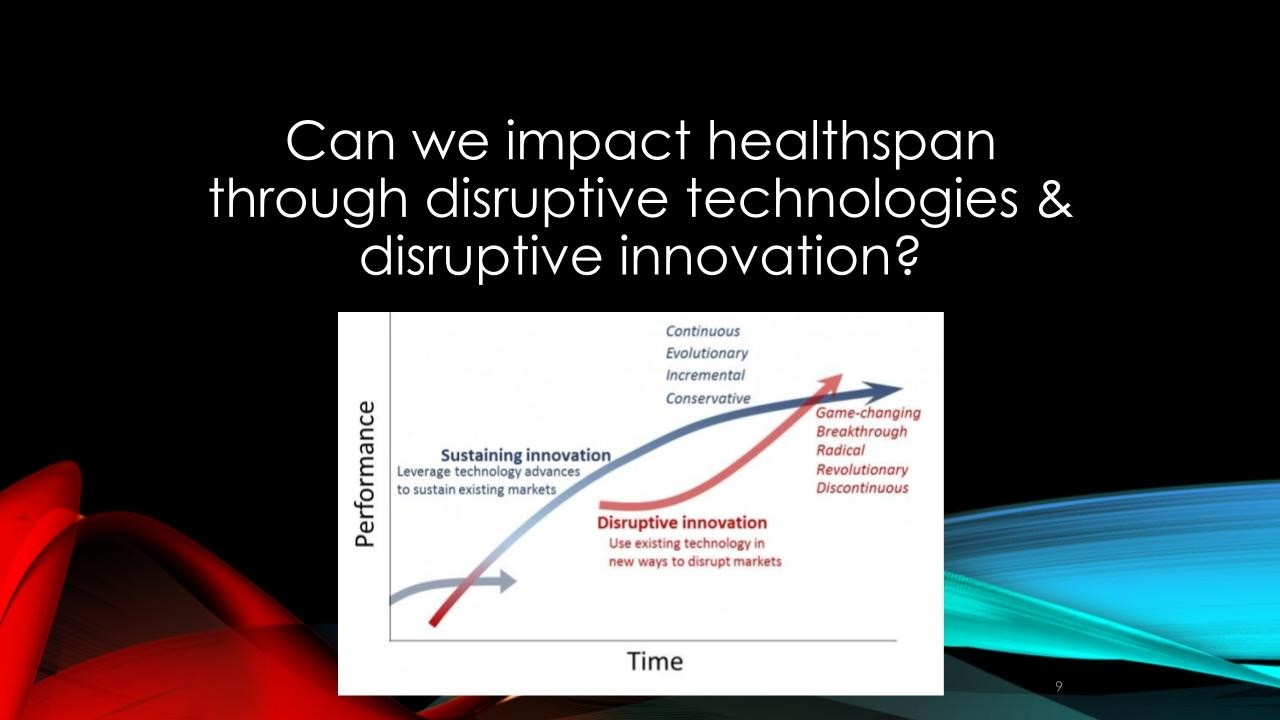
Back in 2015, I gave a talk called Bill's Story. The question I posed then, and the one I am still working to answer, was this:
How can we impact healthspan through disruptive technologies and disruptive innovation?
Healthspan, just to define it clearly, means the number of years you live in good health, not just the number of years you are alive. It is about quality, function, and independence, not just longevity.
We have more tools available to us right now than any previous generation. Continuous glucose monitors. Heart rate variability tracking. DEXA scans for body composition and bone density. Lab panels we can order and track over time. AI-assisted pattern recognition that is only getting smarter.
The question is not whether the tools exist. The question is whether we are willing to use them intentionally, and whether we can build the systems and habits that turn raw data into meaningful action.
My Why, In Plain Terms
I will be 60 this year. I do not have someone watching my data for me. So I watch it myself, not out of anxiety, but out of conviction that proactive health monitoring is one of the most powerful things I can do to age with strength, independence, and clarity.
I do this because of my mom. Because of my dad. Because of every patient and community member I have ever worked with who deserved earlier intervention than our system provided.
And I do it because I genuinely believe we can change the trajectory of how people age, not by waiting until they walk through the emergency room door, but by giving them the knowledge, the data, and the tools to stay out of that door in the first place.
That is the goal. That has always been the goal.
I recorded a solo podcast episode walking through this entire story, the personal history, the data, the decade-long question, and what I think it means for all of us.
If any of this resonates with you, I would love for you to watch it.
A Few Questions Worth Sitting With
Do you know what your key health numbers looked like one year ago? Five years ago?
If someone were watching your daily data right now, what story would it tell?
What is one digital tool you could introduce this month that would give you better visibility into your health?
My plan is to continue exploring the plethora of digital tools, to better understand how LLMs might be able to help me identify and predict important trends over time and to share this with anyone who is interested. It's time we jump the curve and move from treating disease to preventing disease (ok, I have been saying this for almost 20 years but I am still hopeful). I have another 40+ years ahead to continue to figure out a path forward. I hope you will join me on this journey.
Be well.






Comments